Featured
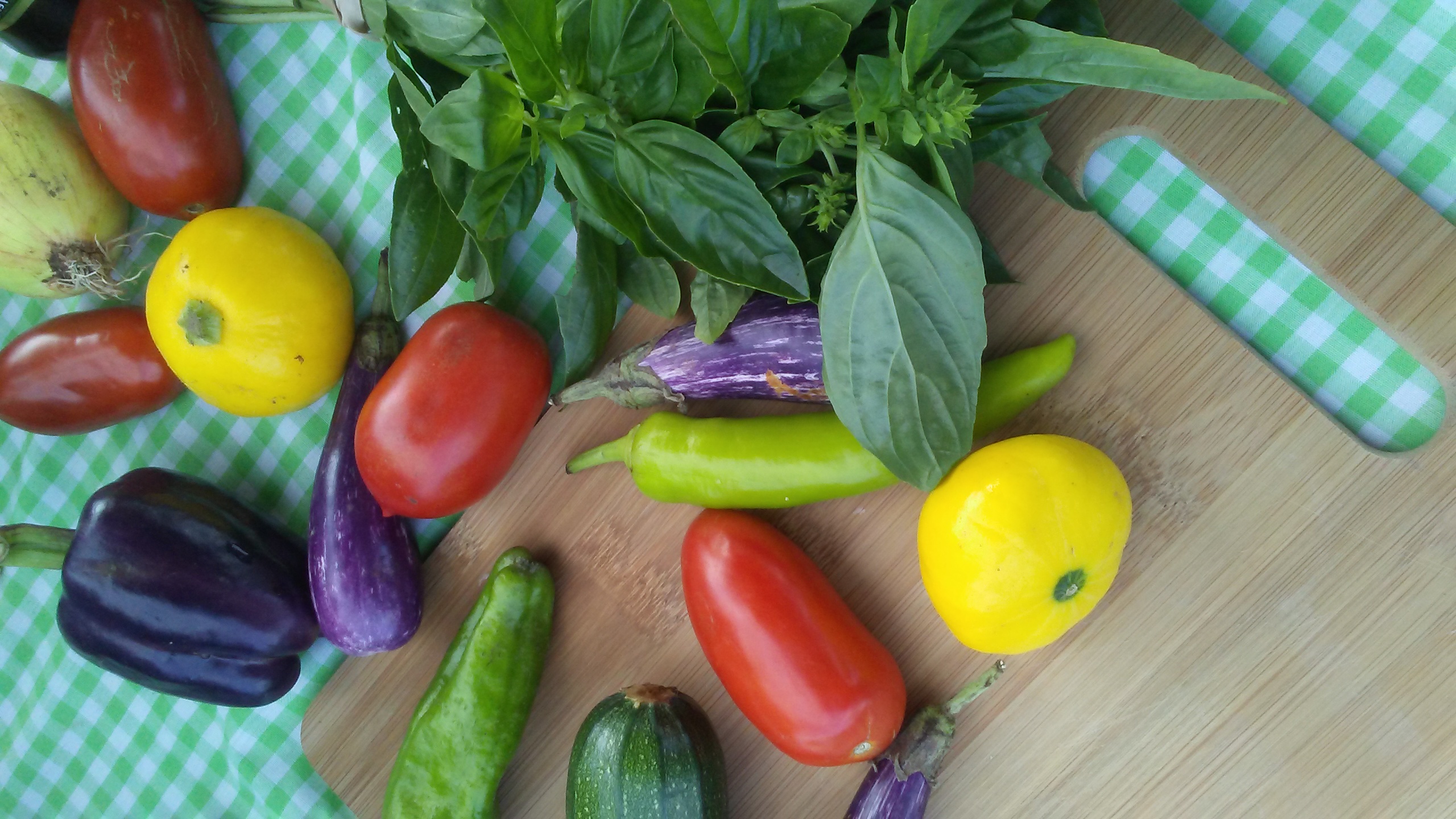
Seasonal Recipes
Recipes from La Rhonda's kitchen, organized by season -- pick one to see what's cooking.
Explore the recipesRecipes from La Rhonda's kitchen, organized by season -- pick one to see what's cooking.
Explore the recipes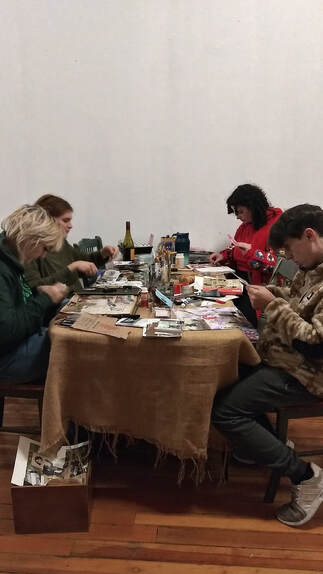
The October Road begins at Interwoven, opening it's doors more frequently in the cooler weather, we are launching new workshops all month led my an array of Artists thoughout the creative community.
Interwoven's "Game Unplugged" with music on a Monday night featuring local musicians and board games, hence the "unplugged" version of things, is beginning to wrap up for the 2022 season.
Be sure to check out Roots Run Wild on October 19th! There will be a brief hiatus in November and then back in December and we are done.
Check out what's going on the first Tuesday of each month on our new calendar.
Gwen LeBlanc and Amber Vaughn join the core group of Artists at Interwoven teaching various ways to collage with fabric and what Amber describes as "garbage" but Gwen and I like to call it re-purposed, or re-claimed goods. You will find many personalites, identities, as well as skills during our events. So if you need something to do, or would like a change of pace, discover the local creatives that make music, fabric, craft and interesting conversation! This is Interwoven — a venue created by an Artist for Artists with more events on the way.
This is where the story gets told.
If you have an idea for a workshop or event, email Rhonda at [email protected].
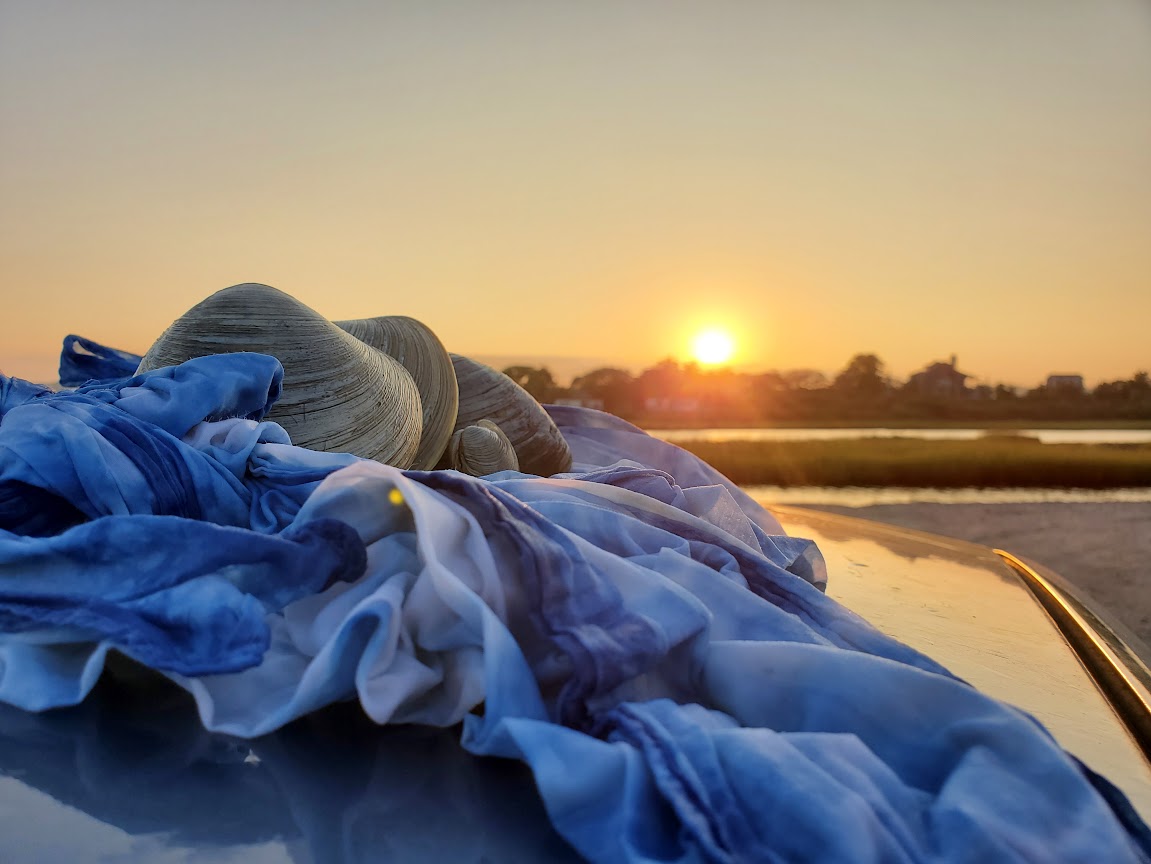
Image by Rhonda M. Fazio
Have you ever looked at the inside of a clam shell in its entirety? A littleneck or cherrystone, top-neck, or the mighty Quahog, all come from the same Mollusca class known as bivalves—a hinged, two-part shell. Clams lack a central nervous system and therefore have no brain. They live in tidal pools of mud where they are dug or raked over easily by seagulls and humans alike. Clams can live up to five hundred years, which we can tell by counting the lines on their outer shell, like the rings of a tree.
Mollusca are beautiful creatures, with unique characteristics of shape and form—think of the nautilus, scallop, and mussels with a range of color from the soft iridescent hues of abalone to the vibrant intensity of the "blue ringed octopus." Stunning. Are there any colors more mysterious and soothing than the deep purple and lavender of the inside surface of a hard-shell clam? Known for their use in currency and ceremony in early colonial history, in the scientific realm they are known as Mercenaria mercenaria. The insides are just as intriguing; the body of a clam is delectably delicious. Commonly known today as "stuffies," stuffed quahogs, baked clams, clams oreganata, or clams casino. All these variations involve surrounding a clam with breadcrumbs, but it truly depends on which state you are in to understand the differences.
"Stuffies" became a thing in the early 20th century in Rhode Island. The origin is credited to Italians and Portuguese reinventing dishes from their homelands on a new shore. If you say "stuffie" you are from Rhode Island, if you say "stuffed quahog" you are from Massachusetts. Quahogs in cuisine moved around the Northeast quicker than they ever could in the sand, which is a little over an inch in fifteen minutes.
The deep purple of the shell is iconic. I have been combing the beach for quahogs since childhood. I've amassed quite a collection of shells during my years. The pounding of the surf produces the most beautiful bits of smooth shells with purple and white stripes. One day, I found an entire shell that, in my eyes, looked like a "crazy quilt" pattern. Tinted with the deepest strips of purple, stripes of lavender, and white parenthetically placed like it was nestling the fleshy body that was once inside, made me realize I could never use this shell to hold my baked clam filling. It is too beautiful.
Why is this clam shell so purple when so many others are not? It has to do with minerals in the sandy mud. Aragonite, another form of calcium carbonate that makes up the shell of a quahog, interacts with the surrounding impurities and the diet of the clam to create these colors. Who knew? The same ocean, along the same coastline, different beaches with an array of minerals, all reacting with the alkaline base of a clam shell. Its position on the pH scale creates the color purple. Looking back, what was once a mystery now makes so much sense and reminds me of my first steps becoming an artist who works with color. Looking at the assemblage of shells strewn about my living and workspaces brings me right back to when I discovered them, sometimes to the exact place.
The fondest memories I have of my childhood are going to the beach with my Sicilian family to dig for clams. We would pack up and pile into the wood-paneled station wagon every Sunday morning (church was on Saturdays in the summer), making our way to the beach. Once there, we would follow my dad into the water to search for quahogs. Summer after summer we would eat, not like kings and queens, but like the peasants we were (and some of us still are). Years later, I would teach my son and his friends how to dig for clams, passing down the family tradition that began in the waters of the Mediterranean so long ago. The following recipe is inspired by that lineage.
12 raw top neck quahog clams (be sure all the clams are closed—if the shells are open, they are not safe for consumption, though you may want to save the shell for its color. Scrub the excess mud off and rinse.)
2 teaspoons salt · 2 quarts water · 2 tablespoons corn meal — for the soak
1 tablespoon butter · 1 tablespoon olive oil · 1 shallot, minced · 1 whole garlic clove
1 cup breadcrumbs (Italian seasoning or plain), or Ritz crackers if preferred
1 teaspoon fresh flat-leaf parsley, chopped, plus a sprig or two more for garnish
Salt, pepper, and hot pepper flakes, to taste
1 lemon — 1 teaspoon juice for the filling, the rest cut into 6 wedges
Soak the clams in a saltwater solution of the salt, water, and corn meal for 30 to 60 minutes, then rinse under fresh running water. Place the clams in a skillet with an inch or two of water, cover, and simmer until they open, 5 to 10 minutes. Remove and let cool, saving the clam juice in a jar and letting the sediment settle.
In a skillet on medium heat, melt the butter and olive oil gently—don't let it burn or smoke. Add the shallot and garlic clove, sauté to translucent, then remove the garlic. Add the breadcrumbs and toast lightly, moistening with the reserved clam juice a ¼ cup at a time so it doesn't turn soggy. Season with salt, pepper, and hot pepper flakes if desired.
Separate the shells, keeping the clams intact, and release the muscle with a knife if needed. Toss the clams with a drizzle of olive oil, the lemon juice, a pinch of salt and pepper, and the chopped parsley, then nestle back into the shells. Top with the breadcrumb mixture and bake at 350°F for 20 to 25 minutes, until golden brown and toasty. Serve with a lemon wedge and a sprinkle of parsley—serves 6, two clams each.
Disfruta! Enjoy!
New posts coming for the summer months. See you soon.
What is it about a city that appeals to people so much that they want to visit or live in it? When we think of Boston, there is Fenway Park, the Freedom Trail, foods from all over the world, a music scene, cityscapes, public parks and gardens, and that Corita Kent Rainbow Swash gas tank visible from the Southeast Expressway into or out of Boston and its harbor of history.
Pretty cool when you think of how much of our nation's history began in Boston. The same can be said about Fall River. That is right, you read that correctly—Fall River. The city may not have a famed ballpark, or be named for a place in England, but it has its own harbor of history and its very own identity.
Originally inhabited by the Pocasset Wampanoag Tribe of the Pokanoket Nation, Fall River is a city with rolling hills and "falling water" that cascades from the Quequechan River (pronounced "Quick-a-shan" by locals), flowing into Mount Hope Bay. Even more distinctive, the Pocasset tribe once had a female ruler, Weetamoe. You may recognize her name and that of her brother-in-law, Metacomet, also known as King Philip, on street signs, land reserves, and mills, many of which originally were named after the tribal nations that existed at the time and still do today.
In 1659, 26 colonists from Plymouth Bay recognized the abundant waterpower from the confluence of two rivers (including the Taunton River) that would eventually power a mighty textile industry. The colonists purchased 26 lots of land from the two Pocasset leaders, Wamsutta and Weetamoe. Unfortunately for the Pocasset, their tribal lands were soon to shrink substantially. Today what remains of their land is the oldest maintained reservation in the country.
(In welcome news this year, the Boston Globe reported that "Brown University is transferring 255 acres of land in Bristol [RI] to a preservation trust set up by the Pokanoket Indian Tribe, marking one of the nation's biggest victories in attempts by Indigenous people to reclaim ancestral lands. The transfer, finalized on November 15, 2024, represents the culmination of an agreement reached in 2017 when Pokanoket tribal members and their supporters occupied the property overlooking Mount Hope Bay for more than a month. The land is the ancestral home of Metacom, the leader of the Pokanoket Wampanoag people, and it's the site of his death in 1676 during King Philip's War. Metacom was a son of Massasoit, the chief who first welcomed the Pilgrims of Plymouth Colony in 1621.")
After its incorporation as a town in 1803, Fall River eventually became a city in 1854, and with that began a thriving economy, industrial wealth, jobs for immigrants, a regional train line, and a Fall River Line sailing from a New York harbor to Mount Hope Bay. With an economy in full speed, immigrants from Europe and beyond poured into the city, establishing homes and small businesses amid the mills and rapidly growing textile industry, bringing their tastes and culinary skills with them. By 1880, Fall River was the largest textile hub in the United States. After WWI, when southern textile operations could offer more diversified products at a much lower price, the gleam of Fall River began to fade. In 2007, Quaker Fabric, at one time Fall River's largest employer and the last of the mighty mills, shut its doors with nothing to take its place. It was a brutal reality, one that has left its mark on the city to this day.
There is still a heartbeat here—the city's character has taken a beating and a lot of work to clean up and restore—with a pulse that is getting stronger. A resurgence of economic development in the form of niche markets, restaurants, smaller textile industries, coffee shops, specialty markets, redesigned landscapes, parks, a music venue, murals, galleries, museums, and a trolley that threads through the living history that is Fall River. The Fall River Visitor Center is run by Viva Fall River and exhibits artwork and crafts created by over 40 makers, artists, and artisans from across the South Coast of Massachusetts and Rhode Island (as well as running the trolley).
One of the small businesses that is putting community first is Christopher's Café, located at 1816 South Main Street (they recently also opened a grab & go at the New Boston Medical Center on New Boston Road). Christopher's has been operating a scratch kitchen since March 2023. The Main Street property had been neglected, and lifelong Fall River residents Christopher and Nathan Silvia had a vision of opening a restaurant with more than mouth-watering eats in mind. In essence, Nate and Christopher wanted to give back to the community that was their childhood home. They transformed the property into a welcoming, inclusive eatery. While the establishment is famous for chocolate chip cookies and other pastries and savories, they have a revolving menu that changes every day and is enjoyed by a diverse group of patrons including neighbors, tradespeople, and tourists.
Christopher's uses a robust social media network to get the word out about the neighborhood and Fall River and how to take care of one's own neighborhood by simple acts that don't require a lot of government intervention—bottle clean-up, clothing drives, toy drives. Christopher's has become a neighborhood community hub in southeast Fall River. Throughout the year, they throw out challenges like creating and maintaining unique storefronts that draw patrons inside—at time of writing, they just kicked off their Holiday Windows & Storefront contest. They also have a donations jar so if someone in the neighborhood can't afford a sandwich, they can eat for free with the collected funds. Last summer, the Silvias made free pizza available on a daily basis for children 16 and under to bridge the need for children's lunches after the school year ended.
Pride is returning to the area. And while the made-from-scratch food at both their locations has many fans, perhaps the most compelling reason to go there is the positive vibes and energy around supporting small businesses, even when it's yet another eatery. Recently, they challenged their customers to "stop by a small, local restaurant, café, or bakery, take a picture of your visit and what you ordered there and tag Christopher's in a FB post about it." Three winners were each given a $100 gift card to the restaurant of their choice, getting the community involved in a real way, with wins all around.
Talking with Patti Rego of Viva Fall River, I asked about the changes going on in the city, the rising cost of living, and who benefits from this transformative time. While understanding the frustrations of watching the city change, she says change must take place to bring people in to support the redevelopment. To retain the city's identity, residents must voice their opinions, we agreed. Create community beyond your comfort zone. Stay informed of what is going on in this city that is changing quickly. Get involved and support local small businesses even if it's through acts of kindness versus dollars—as you can see, it is these acts that bond a neighborhood, a community, a city.
So grab some food and embrace the falling rivers. Take a stroll along Heritage State Park, offering a unique view of an industrial sunset overlooking the waters flowing into Mount Hope Bay. Or head to the Quequechan River Rail Trail and enjoy the place where Weetamoe camped for the winter. It can be hard to imagine that you can find such peace in the middle of the city, but it's there. And if you are fortunate and the timing is right, you may hear some drums at the pond on any given day. Unexpectedly profound when it occurs, and a beautiful testament to the life of the "falling waters" of the "Riv."
VivaFallRiver.com · FallRiverMA.gov
All hail the mighty oak, the tree of the gods, of which man himself was born, sacred to Zeus and worshiped by the Druids, "knower of the oak tree." The oak is one of humankind's most ancient foods: the acorn. The history of how the oak reaches deep into the ground of human civilization has left us with a lore and legend as strong and durable as the tree itself.
These books were a significant part of my journey as a self-taught botanist and forager, opening my eyes to the world of natural plant dyes along the way. I was always in pursuit of how to feed myself and become self-sufficient, but it wasn't until university that the question of how to sustain a creative and self-sufficient future became important to me. The early days of my own creative process led me to the self-sustaining practices I use today.
I recall a crisp autumn day gathering acorns with some dear friends on a gorgeous fall day in New England, peeling back the leathery skin of the shells, chopping up the acorn meat with a blender! We laughed about taking the easy way out with the blender instead of the old-fashioned way, then squeezing the ground acorns through a bandana repeatedly, until the water ran clear and the bitterness washed away.
After the full process, we had a freezer full of acorn flour to use in our favorite cookie, pie, and bread recipes.
Quercus alba, White Oak, grows all around us and bears the least bitter of the acorn nuts. It takes about 30 to 40 years for one tree to produce fruit, and a healthy tree drops about thirty pounds of acorns every few years. Yet acorns are one of the most under-utilized foods on the planet. But we can remedy that.
With more than four hundred species of oak trees found throughout the world—a hundred alone in the United States—and acorns a historical source of food for Indigenous peoples, why are we not utilizing acorns more fully?
The leaves would adorn the ancient crowns of kings, while Elizabeth Tudor learned she would be proclaimed Queen of England while sitting under the long-reaching branches of an oak tree. Ironically, years later, Elizabeth's distant relative Charles II would hide in an oak tree thick with leaves and acorns to escape Oliver Cromwell's soldiers. The tactic would be used again in 1675 during King Philip's War, when a man named Edward Babbitt hid in his own oak tree in Berkley, MA—until his dog gave him away.
In his book Stalking the Wild Asparagus, Euell Gibbons demonstrates how to make acorn flour. You may know Mr. Gibbons from his commercials about wild foods, or as an advocate for foraging over fifty years ago. Born in the Dust Bowl era, Gibbons learned from his mother how to forage wild food when food was scarce, and went on to hone that skill, becoming an advocate for foraging and writing a series of books to support himself and his family.
This recipe is straight out of Euell's book, with a slight rewrite of words to update the vernacular. I leave you with this quote as food for thought:
"It seems a pity that the food which nourished the childhood of our humanity is today nearly everywhere neglected and despised."
—Euell Gibbons, 1962
Inspired by Euell Gibbons
Step 1: Collect acorns from a White Oak Tree—they are the least bitter. (All acorns are good to use but need to be leached of their tannic acid to become edible.) Remove any with cracks or holes. Put in a bowl and fill with water. Remove any that float.
Step 2: Dry, then hammer to open. Discard shells. Transfer the acorn meat to a bowl.
Step 3: Put 2 cups of the acorns in a blender or food processor to coarsely grind, adding a little water as needed until finely chopped. Rinse through a colander lined with a fine cloth, squeezing and repeating several times. Taste for bitterness, and keep rinsing until it should do.
Step 4: On a parchment-lined cookie sheet, dry the leached acorns in a slow oven set at 250°F until dry. Drying time varies—check after 20 minutes the first time, then every 10 to 15 minutes afterward. Document your time, because every oven is different.
Step 5: Return the dried acorn meal to the blender or food processor and mix until finely ground.
Step 6: Store in a glass jar in the refrigerator, or freeze in measured amounts to accommodate recipe conversion.
Step 7: Use acorn flour in a 1:1 ratio with regular white flour in your favorite baking recipes.
Note: Instead of cold leaching, you can roughly chop the acorns and boil them to leach out the bitterness—boil and drain until the water is clear and the bitterness is gone, then follow Steps 4 through 7.
Author's Note: Use Peterson and Golden guides to cross-reference plant identification. When foraging, always use three references. One should always be aware of potentially poisonous plants from your region.
Happy foraging! Disfruta!
A bucket list can mean so many things in a person's life. What is it that you most want to do before you reach the invisible finish line here on Earth? And how are you going to live that life until you get to the place where life stops? The concept of a bucket list is personal and can be as fluid as water or as hard as a rock. It all depends on you, your interests, your curiosity, and where you want to go with it.
We can look at food the same way. We can enjoy the abundance of local, seasonal foods from the South Coast in the summer, while it is at its most vibrant and fresh and easily available—or we can dip our toes into new waters and try something completely different.
My favorite fare in the summer comes from salty ocean bays. It isn't summer for me until I eat my first clam, or feel a warm breeze with the scent of saltwater tickle my face, or enjoy a cocktail on a deck somewhere, a juicy lime clinging to the rim of a pretty glass. (Shout out to PLAY Arcade Bar and Restaurant for having one of the most beautiful views of the New Bedford harbor.)
Speaking of limes… that is a brilliant fruit. Not only do they make your drink taste refreshingly delicious, they also can cook your food without heat. Which makes them a key ingredient in ceviche.
When I began to create my bucket list, the prospect of traveling to distant lands to participate in artist residencies that would enrich both my food and fabric interests put Peru at the top of my list. Known for the ancient art of weaving, spiritual landscapes of the Inca, painted deserts, terrestrial terrain and… food. Impressive range, to say the least. We can thank Peru for foods such as potatoes, tomatoes, and quinoa, to name a few. However, nothing beats their national dish: ceviche.
Many regions of Central and South America have variations of this popular dish, consisting of seafood, lime, and chilies, often with a few extra ingredients, depending on the region—much like the varying seafood that is the focal point of the dish. It simply depends on where you are. For instance, fresh saltwater fish along the coast of Peru is a given when looking for a good ceviche. Lima has two of the best restaurants in the world that feature ceviche. Inland, in the mountain range of the Andes, freshwater trout is the preferred fish, with a delicious, beautiful shade of salmon.
Then there is Mexico, where I experienced a delightful ceviche made with octopus. Here is where the plot thickens: they are extremely intelligent creatures of the ocean. Octopus is in the mollusk family, along with clam, mussel, snail, scallop, and squid. Mollusks can be spineless, soft-bodied organisms with beautiful hard shells, or they can have slinky bodies loaded with defense mechanisms that move them through the water in a hurry, leaving behind a haze of murky ink. Most of them are edible and delicious—even octopus ink, which finds its way into breads and pastas in shades of charcoal, a hue slightly lighter than burnt wood. An octopus is clever—it can open a tightly closed clam. Proof that octopi know about good food.
Be sure to pick up some frozen octopus at a local grocery store. Most of the octopus on the market is harvested from the waters around the African continent. Fresh octopus, while hard to find (because of its very short freshness factor—my friends at Kyler's Seafood confirmed this), is not such a promising choice: it dies slowly, and making ceviche from fresh octopus would be difficult if you are squeamish about cutting into a living animal—it will still move. There is a dish in Japan that serves octopus still moving on the plate—no thank you!
Ceviche requires raw seafood. The acid of the lime combined with the octopus cooks the meat, and adding the other ingredients finishes the dish. Served with a side of sweet potato and corn, it comes as close as you can get to the authenticity of the Peruvian dish. Add the acid of the lime just before serving—this allows the "cooking" absorption of the lime juice into the meat without blocking the absorption of the oil.
Octopus is a favored ingredient in European countries that touch the ocean and the seas. It is enjoyed in local Portuguese cuisine and, my favorite, my Sicilian mother's cooking. It has been an ongoing bucket list pursuit to get my food to taste like my mother's—all my questions, all the sentry moments of watching her in the kitchen, an ingredient out, then add it into the pot when I wasn't looking. But finally, after years of trying, my linguini with white clam sauce tastes just like my mother's! But that's another story for another time.
1 to 2 pounds octopus meat, thawed in fridge, legs only (remove and discard head and beak, may be used)
1 cup freshly squeezed lime juice · 1 small red onion (shallot or scallion may be used)
1 thinly sliced hot pepper of choice, or mild sweet bell pepper
A few sprigs of fresh cilantro, salt and pepper, to taste
¼ to ½ cup extra virgin olive oil (add oil just before serving)
Bring a medium pot of water to a boil. Drop in the octopus and blanch for one minute. Remove from the pot and submerge in ice cold water until cool. Slice the legs into quarter-inch pieces and put in a large bowl. Add the lime juice—enough to evenly coat the octopus slices—and the rest of the ingredients except the oil. Toss, cover, and refrigerate for 2 hours.
Add oil before serving, toss, and season to taste. Spoon into a bowl and serve with tortillas and guacamole. As a light lunch or dinner, serve with corn on the cob and sweet potato—a popular combo in Peru!
Please Note: Consuming raw or undercooked meats, poultry, seafood, shellfish, or eggs may increase your risk of foodborne illness, especially if you have certain medical conditions. If you cannot find raw octopus, cooked frozen can be used and the dish becomes more of a ceviche-style versus a straightforward ceviche.
It's hard to imagine that in the abundantly beautiful region of Southeastern Massachusetts, access to local food is not created equal. While many of us can jump in a car, drive down a country road, and pick up a few things at a local farm stand, if you are living in a city it becomes more of a challenge: in an urban environment, where do you get fresh and local foods?
Eight years ago, a nonprofit organization spearheaded work on this question by talking with the urban community of New Bedford. In 2017, the Coastal Foodshed (CFS) was formed with a mission to make local foods accessible to everyone and to become southeastern Massachusetts's local food hub. Stephanie Perks, one of CFS's co-founders and its hand at the helm, has accomplished much more than that in the years since.
The Southeastern Massachusetts Agricultural Partnership (SEMAP) is an organization that supports and connects local farmers to resources, and educates the community about the value of local food. SEMAP played a vital role in establishing CFS's early connections between farmers and the food hub. Initial grant funding came from the Massachusetts Department of Agricultural Resources (MDAR, CFS's biggest supporter) and Harvard Pilgrim Healthcare—capital that helped establish the New Bedford Farmers Market (NBFM). Those who are food insecure can use their Supplemental Nutrition Assistance Program (SNAP) benefits to purchase local foods at the NBFM.
CFS farmer Chris English of Groundwork Farm in Westport is a vendor at the New Bedford Farmers Market. He says having CFS open markets in cities like New Bedford creates a tremendous opportunity for farmers who lack a permanent site of their own. "It gives farmers access to a huge demographic of people who want to buy local," Chris says. "We get to meet and interact with our customers, broadening our demographic." Chris describes using methods derived from permaculture, a form of regenerative agriculture—small scale farming that helps him keep the farm healthy and creates a robust ecosystem that produces nutrient-dense foods. He's happy that this is the quality of food that reaches the NBFM community.
"The idea of a food hub existed before we even thought of it," says Stephanie. "Our goal was to form one in our region and stretch it throughout the South Coast." With a background in food culture and nutrition, Stephanie wanted the hub to become more than simply a place to find local foods—she wanted people to feel connected to the foods they eat, for that connection to become a part of their everyday life. But building such an organization meant she needed the help of the community and its partners.
As the demand for local food grew, people wanted more choices. Funding grew consistent, coming from sponsors like Bristol County Savings, private bank donations, community foundation grants, and public donations—which led to a truck for a mobile food stand, another market, and more food demos. CFS was moving at a productive pace when the pandemic hit, abruptly killing the momentum in all directions. In response to the closings of in-person markets around the city, CFS pivoted to a virtual market so local food could still get into the hands of the community.
The early days of the farmers' market in downtown New Bedford validated the decision to create a regional food hub. Local food producers began selling small-batch goods—honey and baked goods among them. I was one of them, selling my own jams, sourcing ingredients locally through the CFS to make the best quality product possible. Then Stephanie asked if I wanted to do a cooking demo, an educational component of the food hub. So there I was, out on the street at a CSA site, flipping veggies and giving out free samples, working side by side with community health worker Jamie Barberena, closing the gap between cultures with language and food. It was working: local food was getting into the hands of the community at last.
Now, on the other side of the pandemic, building a hunger relief program funded by federal Local Food Purchasing Assistance (LFPA) grants administered by the Massachusetts Department of Agricultural Resources helps address ongoing issues of food insecurity. Just as CFS built relationships with farmers, partner organizations such as Coastline Elderly, PACE (People Acting in Community Endeavors), the newly formed Sacred Birthing Village, YWCA, and the Bend Farm are direct points of contact with New Bedford's food-insecure populations. Working together, they distribute food throughout the city, closing the gap yet again and bringing nutrient-dense food to the community as a whole.
Recently, Coastal Foodshed moved into 5,500 square feet of office space at the Kilburn Mill, now referred to as a "Farmer Food Hub" and headquarters for service to the South Coast region—including Tiverton, Wareham, and Westport. That means everyone has access to the same quality of food, because the food coming from the food hub has been grown and sourced with the same shared goals.
"We have never had a home before, or a place to invite the public in," Stephanie explains. "We want folks to understand the importance of local foods. We want to educate people about the connection to your food. The hub is a place where everyone can visit, where you can know your farmer, and feel connected to your food. And that's a pretty good thing."
DoCo (short for Dough Company), a restaurant in the Mill, has been serving up local fare since opening in 2020—they are a customer and vendor of the Virtual Market. So is Coastal Provisions, a boutique general store in New Bedford's West End dedicated to providing quality local products to the community. And then there's me—Stephanie reminds me during our conversation—La Rhonda, the South Coast Sicilian! Besides making a craft jam, I am a zero-waste caterer and food preserver. Through another MDAR grant, I teach the community how to preserve food each month at the NBFM.
127 W. Rodney French Boulevard
New Bedford, MA 02744
(508) 259-2647
CoastalFoodshed.org
Gingerbread people, sweet and spicy treats that usually show up during winter holidays, have their origins in ancient times. However, it wasn't until the 16th century that they began to take shape as gingerbread men, literally and figuratively. Queen Elizabeth the First had her royal baker make gingerbread men in the image of visiting dignitaries to be presented as diplomatic tributes at state events. Today, these gingerbread figures are often tied with ribbon for seasonal festivities. Gingerbread is made with ingredients you may already have in your cupboard. Need a fun, creative, and tasty snow day activity? Make gingerbread people from the recipe below!
Preheat the oven to 350°F.
2¼ cups flour · ½ cup sugar · ½ cup molasses · 1 egg · ½ cup butter
1 teaspoon each ground ginger and cloves · ½ teaspoon each ground cinnamon, cardamom, and nutmeg
1 teaspoon baking soda · ½ teaspoon baking powder · ½ teaspoon salt
Combine all the ingredients in a bowl and mix on medium speed with a hand mixer, or use a wooden spoon, until well mixed. Form into a ball and refrigerate for an hour.
Working on a lightly floured surface, cut the ball of dough into 4 pieces. Roll out to about ⅛-inch thickness and cut into gingerbread people (or your favorite shapes) using cookie cutters. Using a spatula, transfer to a cookie sheet lined with parchment paper. Bake for about 8 minutes, watching closely minute by minute so they don't burn.
Transfer to a wire rack and cool completely before icing and decorating.
Icing
1¾ cups confectioners' sugar · ⅛ teaspoon cream of tartar · ¼ cup water · Drop of vanilla extract
In a small bowl, sift the confectioners' sugar and cream of tartar. Mix in the water and vanilla extract to form a smooth, creamy icing—adjust with more confectioners' sugar or water until it's slightly thinner than peanut butter, not so thin that it drips. Pipe onto the cooled gingerbread people and decorate with your favorite sprinkles or candy.
Cook's Note: If using raisins for decorating, press them into the raw dough before baking rather than adding them after.
Desfruta! Enjoy!
It is universally known that there are questions in the world that necessitate a response. For instance, do you like cats or dogs, Beatles or Rolling Stones, sweet or savory…? I can go on with the list, for it is as big as the universe itself, there are so many obsessions and fascinations in this world.
Perhaps there is no bigger obsession in the autumn than pumpkin-spice-flavored anything. However, a few questions arise about this fall favorite, such as the origin of the pumpkin. Is it from North America or South America? Is it a fruit or a vegetable? And what color is it, really?
To begin with, pumpkins are from Central America, specifically Mexico—as we know from seeds that date back about 10,000 years. Second, pumpkins grow from a flower, which makes them a fruit—a prolific seed bearer in the botanical world with a voluminous range of varieties and colors from green to yellow, orange and browns, even reds, white, and blue. As you enjoy every bite of your pumpkin bread, know that this treat is more American than apple pie.
Preheat the oven to 325°F and set an oven rack in the middle position. Prepare two 8" x 4" loaf pans with butter and dust with flour.
2 cups all-purpose flour · ½ teaspoon salt · 1 teaspoon baking soda · ½ teaspoon baking powder
1 teaspoon each ground cloves, cinnamon, nutmeg
1½ sticks (¾ cup) unsalted butter, softened · 2 cups sugar · 2 large eggs
2 cups roasted/baked pumpkin, puréed
Chopped pecans and golden raisins (optional)
In a medium bowl, combine the dry ingredients. Whisk to combine and set aside.
In a large bowl, cream together the butter and sugar by hand or mixer until just blended. Add the eggs one at a time, beating well after each addition. Continue beating until very light and fluffy, a few minutes.
Add the flour mixture, one cup at a time, and mix on low speed until combined. Add the pumpkin and mix on low speed until combined.
Turn the batter into the prepared pans, dividing evenly, and bake for 65 to 75 minutes, or until a cake tester inserted into the center comes out clean. Cool in the pans for 10 minutes, then remove and cool completely on a wire rack.
Cook's Note: I like to soak my raisins in rum or whiskey overnight before adding them to the recipe.
If not serving immediately, wrap in foil and freeze up to 3 months. Thaw in the fridge overnight before serving.
Disfruta!
It is summer on the South Coast. The fields are planted with crops shooting up from the ground, pointing towards the sun. It has just rained, and you are out for a walk across the wet lawn, toward a wide-open path that connects to a cluster of overgrown brush with trees towering overhead, casting shade as they lean to one side. These are old trees, older than the abandoned and rusted-down tractor nested in the brush. The tractor is covered in berries that seem to drop from the sky. What are those berries? They look like they could be blackberries—plump clusters of juiciness, not purple at all, but a rosy pink.
Mulberries! Morus alba, better known as a White Mulberry tree. And not a bush at all, if one remembers the nursery rhyme. One could half expect to find a Maypole around the general vicinity, left over from a midsummer festival a hundred or so years ago. People would dance around a tall wooden pole draped in garland, holding onto silk ribbons for reasons I do not know. What I do know is the silk ribbons were made through a governmental initiative of the sericulture days of Colonial America up until the first half of the 19th century. Sericulture is the cultivation of silkworms to produce silk. Morus rubra is the Red Mulberry tree indigenous to eastern North America, but farmers in the 19th century planted White Mulberry trees when offered a bounty by the British, as a way of establishing an economic resource for the developing economy.
While the berries are a sweet and succulent treat for birds, humans, and other animals, mulberry leaves fed the voracious hunger of the silkworms. Their waste turned into the filament that would be reeled and spun into silk thread, wound into skeins of yarn, sometimes dyed, and woven into the finest fabric, then shipped off to Europe up until the Revolutionary War.
But mulberries, packed to the max with health benefits—fresh or dried, purple, rosy-pink, or white—are a taste of the past, present, and future all in one fruit, present in our American landscape from before the 17th century all the way through present time. We can use the fresh berries in pies, tarts, mix them with yogurt, sprinkle them over a bowl of ice cream, or mix them into a smoothie for natural sweetness without the addition of processed sugars.
Mulberries have been a part of human consumption for centuries, dating back to the original trade routes of the Silk Road. And when that road closed in 1453 due to the fall of the Byzantine Empire, Europeans would pick up that meandering thread to seek out new routes in which to trade with Asia—and, by taking a wrong turn, would open a gateway to the Americas, changing the course of history.
So, the next time you see mulberries as you walk down a dirt road, a path to some overgrown woods, or that annoying tree in your yard that drops berries all over the place (as do the birds that eat them)—pick some up and try them. Bring them to your next social gathering and mix them in with your favorite cocktails for a great conversation starter.
Mulberry trees are a part of our American history—they branch from the roads that people have traveled worldwide to the ones that have been here all along.
Simple Syrup
2 cups water · 1 cup sugar · 1 cup of mulberries · Juice of one lemon
Combine all of the ingredients and cook over medium heat in a saucepan, stirring occasionally, until the sugar is completely dissolved.
Strain the syrup, cool before pouring into a glass jar or bottle, and refrigerate for up to one week.
Combine with soda, seltzer, or mineral water to make a fresh summer soda. Garnish with berries, or any of the citrus fruits. Enjoy!
Makes enough syrup for about 12 to 16 drinks, with or without alcohol, to taste.
Author's note: you can replace mulberries with other summer fruits for a variety of different summer sodas.
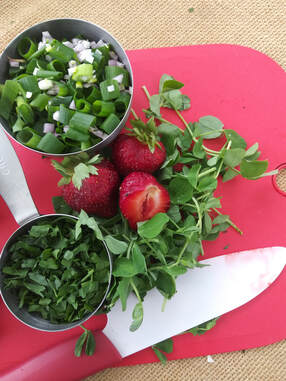
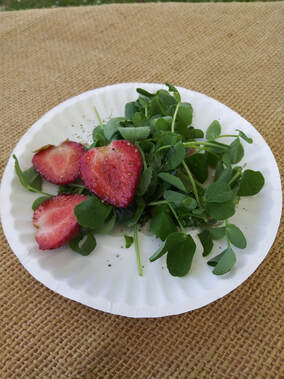
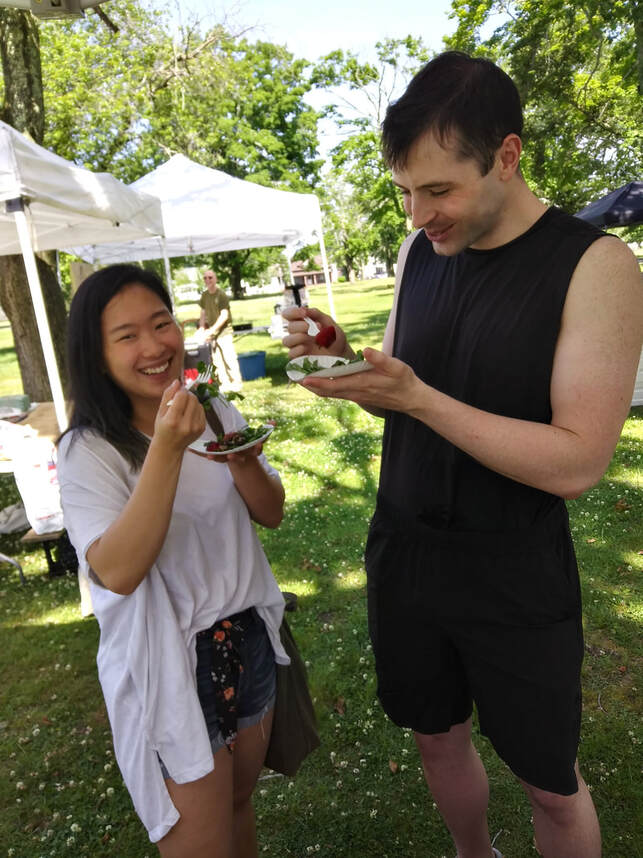
Did you know that strawberries are social plants? They require a male and female plant to produce the fruit which is in fact, an ovary covered in seeds…hmm. Sweet, succulent, juicy, red berries. They are the perfect fruit for Pride month. The strawberry is steeped in sexual orientation.
I am not joking. This is real. Read the article for yourself here. For more details in the scientific realm of the strawberry's sexuality you can read the original article here.
All this talk of strawberries and sexuality makes me want to watch the movie "Chocolat" with Juliet Binoche. Truth be known, in the spirit of Pride month, she is the only woman I would jump the fence for…wait, there is also Lena Olin in "The Unbearable Lightness of Being." Both women were in both films. I highly reccomend that you indulge yourself by watching these two beauties own the screen with their spectacular performances. And I double dare you not to fall in love with them. I've said enough on the subject, but there is this really great scene when Lena Olin's character is eating fondue…watch it! Good films, good books of cinematic and literary excellence.
Back to strawberries… if you would like to learn how to make delicious food with strawberries and their plant friends, then come visit me at the New Bedford Farmers Markets where I perform cooking demos and teach "The Art and Language of Food". I cook what is in season and readily available at each market and mobile food stand throughout the city. Check out My Maps to see where I will be each week from June through October. Follow environmental alchemy on Instagram where I post the images of what I make each week. Come on over for a visit and taste what is fresh at the market and learn some healthful tips as I highlight my "SNAP to the MAX" philosophy:
"Use what you have and learn how to make the most of it."
See you soon.

I love song lyrics that reference a move on a chess board. "Your Move" by YES, is one of those great, now classic tunes that I never get tired of hearing. It has everything I love in a vinyl recording: instruments, clear sound without any technology, loaded lyrics that tell a story within the story and let's not forget the magnificent art work of an album cover, back in the day this was the access to art that my young eyes adored.
I would spend hours looking at some of them, laying on the floor, hands under my chin, seeing the little things without glasses… and then the song explodes into the rock and roll stratosphere, lifting you up and out of this world. That's the magic of a well made album.
Yes! to listening to the entire compilation of songs. This is the art of compostion in sounds. Listening to one song is like tearing a page from a book, it becomes isolated from the rest of the story. This is what is lost in today's digital discography of downloads. Besides, you cannot get your albums signed by recording Artists who wander into your studio before the show starts at the Narrows Center for the Arts to buy gifts for their wives…or themselves.
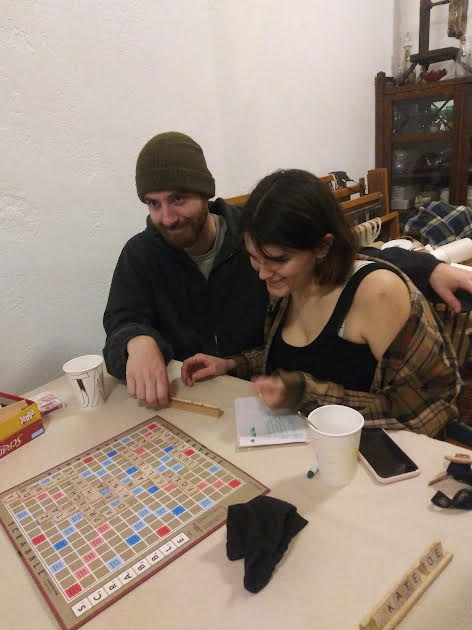
If you love board games and music as much as I do, then I invite you to "Game Unplugged with Music on a Monday Night" at Interwoven. Thanks to a grant from the New Bedford Cultural Council there is a budget for musicians, new and seasoned, who would like to jam out for a couple of hours while we play our games "unplugged."
On quiet Monday nights in downtown,
Turn off, Take a seat, and Let's play.
First Mondays of each month, unless otherwise noted, for however long the funds last.
July 4th (closed) & 18th — musical guest — tbd
August 1st & 15th — musical guest tbd
September
October
Learn to Play 6-7 Live Music 7-9 Limit Time 10ish
Coffee, tea and goodies will be available. Donations only. This is an alcohol free event. Space is limited.
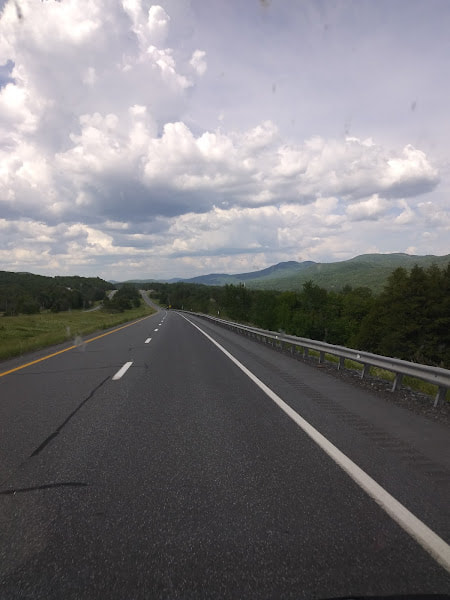
James Taylor's lyrical journey nearest and dearest to my heart, the "Highway Song," speaks of the road and a longing for the soul to ramble. A place of solitude in motion, to think, to reflect, to form new ideas or resurrect old ones. The road is a place that brings tremendous joy and creativity into the heart of me. After a grueling two years of limitations that were killing my soul slowly (who else is with me on this one?), not to mention several health scares that had almost killed me for real, it becomes a safe space where I put myself back together with a renewed spirit for life, time after time. It is the place where I spritually survive and thrive.
Thanks to the many Local Cultural Councils throughout the Commonwealth with the support of the Massachusetts Cultural Council, Dyer Maker Studio® will be "back on the road again" this spring and summer. “Dyeing to Wear It: Creating Community with Color” will partner with libraries all around the Commonwealth. Follow my social media pages as I prepare to journey around this beautiful state of Massachusetts, along with a dip into the neighboring state of New Hampshire, with more announcements and more places to come, just there, on the "blue horizon"…
And where there is light, there is color and hand crafted gifts you can make yourself! Sign up for my "Dyeing to Wear It"™ class, The Art of the Gift, click on the Book now button and choose the date.
On Saturday, December 18th 10-2, I will be decorating cookies with the New Bedford Farmers Market at Buttonwood Park Zoo. Bring your kids/grandkids — special treats if you come dressed as an elf!
In my world, all color is beautiful so how can it not be renewed — It's my birthday month! The quote comes from a song by Sarah Brasko and is such a well written lyric, filled with life and strength. Like the city of New Bedford.
It's a hectic time of year to be sure but take time for a stroll downtown, so much is happening. Interwoven will be open for small business Saturday on the 27th. Click on the "BOOK NOW" button and follow the prompts, to sign up for "Dyeing to Wear It" — coming in December. I will post pop up musical performances on my social media pages.
Interwoven will have a booth at the Buzzard's Bay Brewery Holiday Stroll event.
La Rhonda is cooking up the freshest, sweetest, and the most savory dishes from ingredients found at the New Bedford Farmer's Market each week at Buttonwood Park's Senior Center. Saturdays 10-2pm.
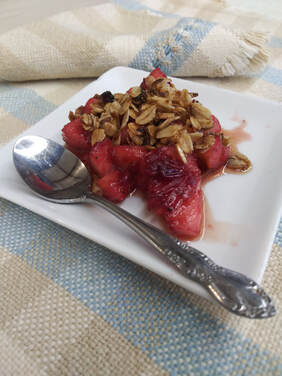
A sweet little portion of dessert with a set of my handwoven placemats and napkins. Interwoven offers classes in weaving and natural dye wearables.
Visit the gallery/makerspace to shop local. Gift certificates available for the Holidays and anytime of the year.
Contact me if you have any special requests. Private classes are available.
2-3 apples — I use the spotty kind for my jam and desserts — peeled and diced or sliced. I eat the pristine looking apples of course.
1 handful of cranberries
Generous pinches of cinnamon, nutmeg and cloves or to taste
Saute pan on medium heat
—melt 1 Tbs of butter, add fruit, saute for 2 minutes
—add 1/4-1/2 cup of water
—drizzle maple syrup to taste
—1 Tbs sugar is optional
Cook until the fruit is tender and the cranberries "bleed" their color. Cook down the liquid until it begins to create a bit of syrup. In a different pan, use the same ingredients (omit fruit and water) to toast the oats. Toast until light brown, adding the syrup just before it is done. Serve with whipped cream or a drizzle of farm fresh heavy cream. So good! The best part is that there isn't a big pan hanging around.
Just a serving or two. Simple and fresh. I enjoy the tart flavor however, sweeten more if desired.
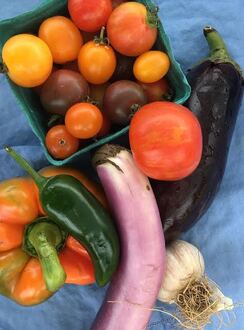
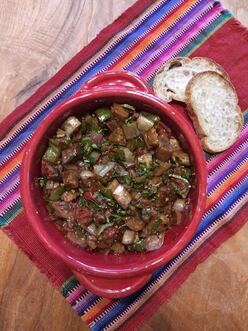
Cooking with La Rhonda, the South Coast Sicilian!
What do you do with the vegetable overload during havest season? More important than that — how do you cook eggplant? Let me show you how easy cooking can be as you watch me prepare simple and fresh foods at the New Bedford Farmer's Market and Coastal Foodshed pop-up markets ever week through September.
New Bedford Farmers Market at Brooklawn Park is each Monday (except Labor Day) 2-6. Cooking demo 2-4.
The Coastal Foodshed pop up market will be at Clasky Common every Friday from 2-6. Cooking demo is 2-4.
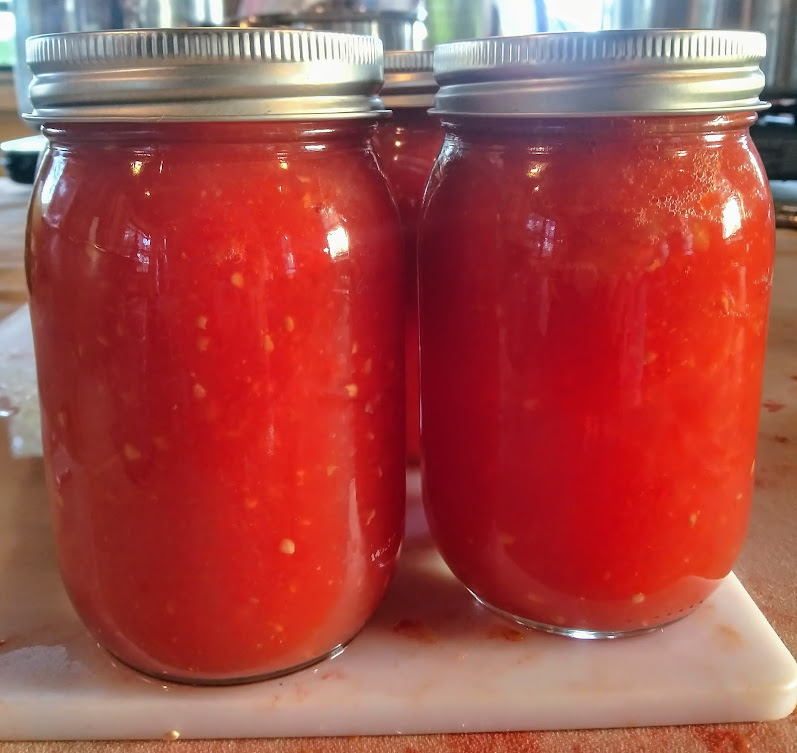
Walk in and Learn: An Introductory Demonstration to Canning...
August 30th, at DoCo restaraunt. Details in the link.
To register: fb.me/e/2wHwrniWi
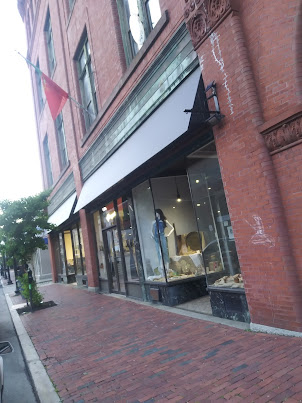
Where the street has a name...634 Pleasant Street! We will be open Friday August 6th from 5-8pm. Stop by and see what Interwoven is all about.
"Spring is a perfect time to prepare lighter and simpler meals packed with nutritious flavor.
The greener the vegetable, the more nutrient dense it is, and exactly what we need after a long winter of comfort foods. All you have to do is grab a handful of greens and top off any dish raw or cooked. Choose from a variety of deep green foods such as kale, spinach, pea tendrils, red and green lettuces, and asparagus. There are still so many more varieties out there but it depends on what your local farmer is growing each season.
Many greens at the farmers market already come in bags and just need a quick wash. It is always a good idea to put your greens in a bowl filled with water and a cap full of apple cider vinegar, give it a swish, drain, pat dry with a paper towel and store in a breathable container in the refrigerator. Leafy greens cook within a minute, asparagus takes a little longer."
— Rhonda
A simple, flexible omelet packed with greens and asparagus. Easily adaptable based on what vegetables you have on hand.
Serves: 1Mix chopped asparagus and leafy greens into the egg mixture. Pour the mixture into greased muffin cups and bake at 350°F until set and lightly golden. These can be cooled, wrapped individually, and frozen for up to 2 months. Reheat gently at 250°F or until warmed through.
A flexible, hearty salad that uses up leftover vegetables and turns them into a warm, satisfying meal. The heat from the roasted vegetables gently wilts the spinach.
Serves: 2-3Serve warm as a light lunch or dinner on its own.
A simple, comforting pasta dish with sautéed mushrooms, fresh spinach, and a light lemon finish.
Serves: 2A bright, tart homemade syrup made with fresh rhubarb and lemon. Mix with sparkling water for a refreshing seasonal drink.
Makes about 1½–2 cups syrup · Yields approximately 12–16 drinksMix 2–4 tablespoons of syrup with soda water, seltzer, or mineral water to taste.
Serve over ice and garnish with strawberries, lime, or other citrus.
This syrup can also be used in cocktails or mocktails. Adjust sweetness by adding more or less syrup depending on your preference.
"Summer yields a variety of fresh fruits and vegetables in a gorgeous array of colors that make them a delight to eat.
Some of my fondest memories of food made by my mother came from my dad's garden. Sweet, savory, and succulent one-dish wonders that I still make to this day. The summer months are also an opportunity to begin proper planning for the foods you can keep with you and have ready to use during the long days of winter wishing for summer again.
On the coast of southeastern Massachusetts, we have an abundance of food in and out of the water that is hard not to cook even in the summer heat. We love to cook outside on the grill to keep things cool whenever possible."
— Rhonda
A simple, fresh vegetable sauté that highlights summer produce with olive oil, herbs, and garlic. Serve as a side dish or over pasta or rice for a light meal.
Serves: 1-2 (or 2-3 as a side dish)This makes a simple, flavorful side for grilled or roasted meats, or a light vegetarian meal over grains or pasta.
Crispy, savory fritters made with fresh corn and vegetables. Great as a light meal, side dish, or tucked into wraps and tacos.
Serves: 2-3 (as a light meal or side)Serve warm with yogurt sauce, and add hot sauce if desired.
Shape into larger patties for veggie burgers, or cut into halves to use in tacos or wraps.
Cooked fritters can be refrigerated for up to 3 days. Reheat in a skillet or oven to maintain crispness.
Freeze cooked fritters in a single layer, then transfer to a container or bag. Reheat from frozen in a skillet or oven until warmed through and crisp.
A simple, coastal-inspired tomato and seafood stew that comes together quickly and is best served with crusty bread.
Serves: 2-3Serve warm with crusty bread for dipping.
Add shellfish or squid for a mixed seafood version. Cook shellfish separately until opened, then add to the tomato base along with any cooking liquid (avoiding any grit at the bottom of the pan). Fresh corn kernels also make a nice addition.
This stew is best enjoyed fresh. If freezing, do so without shellfish and note that the texture of fish may soften slightly when reheated.
A refreshing homemade soda made with fresh blueberries and lemon. Mix with sparkling water for a bright, seasonal drink.
Serves: about 1½ to 2 cups of syrup · Yields approximately 12–16 drinks (depending on how strong you like it)Mix 2–4 tablespoons of blueberry syrup with soda water, seltzer, or mineral water to taste.
Serve over ice and garnish with fresh blueberries, lemon, or lime slices.
Swap out the blueberries for mulberries or any other fruit in season—the same method works for a variety of different summer sodas.
This syrup also works well in cocktails or mocktails. Adjust sweetness by adding more or less syrup depending on your taste.
Makes enough syrup for approximately 12–16 drinks.
Octopus ceviche brightened with lime, sweet peppers, and cilantro — the acid of the lime cooks the meat, just like the other ingredients finish the dish. Served with a side of sweet potato and corn as close as you can get to the authenticity of the Peruvian dish.
Serves: 2-3From the edible article “International Waters: Bringing Your Bucket List Home”.
As a light lunch or dinner, serve with corn on the cob and sweet potato. This is a popular combo in Peru!
Consuming raw or undercooked meats, poultry, seafood, shellfish, or eggs may increase your risk of foodborne illness, especially if you have certain medical conditions.
If you cannot find raw octopus, then cooked frozen can be used and the dish becomes more of a ceviche-style versus a straightforward ceviche.
Local top neck quahog clams, simmered open, then stuffed with a lightly toasted breadcrumb filling and baked until golden — a South Coast summer classic, inspired by a lifetime of digging for quahogs with family.
Serves: 6 people, two clams eachFrom the edible article “Deep Purple”.
Disfruta! Enjoy!
"Autumn is as beautiful as it is abundantly bittersweet.
Watching the summer ebb, we enjoy the last of the harvest as we get ready for what is creeping around the corner - winter! Now is the time to freeze some of your favorite local vegetables and fruits like: corn, green beans, berries and even dry some herbs to be used over the winter."
— Rhonda
A flexible, hearty soup designed for using up leftover vegetables. Warm, comforting, and easy to adapt based on what you have on hand.
Serves: 3-4Serve warm with bread and a simple salad for a complete meal.
Cool completely and freeze leftovers in single portions for easy future meals.
Tomatoes are dwindling in the late summer and early fall, so you can still enjoy them through this simple, fresh tomato sauce made with summer tomatoes, garlic, and basil. Perfect tossed with pasta or served alongside bread.
Serves: 2-3Pasta shapes with ridges or curves work best, as they hold onto the sauce. Top with Parmesan cheese if desired.
This sauce is best made with peak-season summer tomatoes for the richest flavor.
This simple fruit crisp is warmly spiced with a bright tart flavor from the cranberries. It makes a cozy dessert for chilly evenings and is just as lovely served for breakfast the next morning.
Serves: 2 (or 1-2 depending on portion size)Serve warm with whipped cream, a drizzle of heavy cream, or a scoop of ice cream.
For a warm breakfast, serve with yogurt instead of cream or ice cream. You can also replace the cranberries with roasted butternut squash for a cozy fall variation.
A cozy way to turn Thanksgiving leftovers into a brand-new meal. This comforting casserole is flexible, easy to assemble, and perfect for a quiet supper the day after the holiday.
Serves: 2-4This recipe is very forgiving—use whatever savory Thanksgiving leftovers you have on hand to make it your own.
Freeze extra portions for an easy meal later in the season. Reheat in the oven or microwave until warmed through.
Inspired by Euell Gibbons. A foraged flour made from acorns, leached of their bitter tannic acid, then dried and ground — use it in a 1:1 ratio with regular white flour in your favorite baking recipes.
Yield: varies by batchFrom the edible article “The Best Things in Life are Trees… with Acorns”.
Instead of cold leaching, you can roughly chop the acorns and boil them to leach out the bitterness. Boil and drain until the water is clear and the bitterness is gone, then follow the drying and grinding steps above.
Use Peterson and Golden guides to cross-reference plant identification. When foraging, always use three references. One should always be aware of potentially poisonous plants from your region.
Happy foraging! Disfruta!
"Winter is a wonderful time to cook ahead and keep a few homemade meals in the freezer for snowy or busy days.
Freeze single portions in labeled containers so they're easy to thaw and enjoy later. Don't forget to add the date before freezing."
— Rhonda
A warmly spiced pumpkin bread that's rich, tender, and perfect for fall mornings or afternoon coffee. Add pecans and golden raisins for extra texture and sweetness.
Serves: 10-12 (or 1-2 small loaves / about 12 muffins—to freeze and use later)From the edible article “The Great American Pumpkin Bread”.
Wrap the cooled bread tightly in parchment paper, then foil, and freeze for up to 3 months. Thaw overnight in the refrigerator before serving.
This recipe also works beautifully with other winter squashes. Try substituting the pumpkin purée with roasted and puréed butternut squash, acorn squash, or blue hubbard squash for slightly different flavors and sweetness.
These mini meatloaves are comforting, easy to portion, and perfect for freezing for future meals. Serve with mashed potatoes, roasted vegetables, or tucked into a sandwich the next day.
Serves: 4 (makes 8-10 mini meatloaf muffins—to freeze for use later)Freeze extra meatloaf muffins individually for easy future meals. Reheat in the microwave or oven until warmed through.
Bright flavors and warming spices make this comforting soup feel like a little taste of summer during the colder months. Enjoy with crusty bread, rice, or a simple salad.
Serves: 3 cupsServe over rice or alongside bread and a salad for a simple meal.
Freeze extra soup in single portions for an easy meal another day.
This soup also works well with added chicken, fish, or shrimp. If you do not have garam masala, try a light pinch of cinnamon for a gentle warm spice.
Tender roasted sweet potatoes topped with creamy feta and a drizzle of honey. This simple dish makes an elegant side for fall and winter meals.
Serves: 2-4 as a side dishServe warm as a side dish with roasted chicken, pork, fish, or a hearty grain salad.
Classic spiced gingerbread cookies with a simple piped icing — a fun, creative snow day activity, decorated with your favorite sprinkles or candy.
Makes about 2 dozen cookiesFrom the edible article “Gingerbread People”.
In a small bowl, sift the confectioners' sugar and cream of tartar. Mix in the water and vanilla extract to form a smooth, creamy icing — adjust with more confectioners' sugar or water until it's slightly thinner than peanut butter, not so thin that it drips. Pipe onto the cooled gingerbread people and decorate with your favorite sprinkles or candy.
If using raisins for decorating, press them into the raw dough before baking rather than adding them after.
Desfruta! Enjoy!
Saving seasonal foods helps you enjoy local produce from the Southcoast of Massachusetts all year long. These simple preservation methods make winter cooking easier, especially when fresh local produce is harder to find. Small, ready-to-use portions help reduce waste and make everyday meals faster and more enjoyable.
Freezing is one of the easiest ways to preserve vegetables like corn, peppers, squash, and green beans.
Basic steps:
Tip: Freeze in small portions so you can use just what you need for soups, sautés, or side dishes.
Freezing fruit is an easy way to save the taste of summer for later in the year. It works well for berries, peaches, apples, and rhubarb.
Simple method:
Tip: Frozen fruit can be used directly in baking, smoothies, oatmeal, or cooked into sauces without thawing first.
Drying herbs helps you keep summer flavors for months.
Simple method:
Tip: Dried herbs are stronger than fresh—use a smaller amount when cooking.
This is a great way to save herbs like basil, parsley, cilantro, or celery tops.
Steps:
How to use: Drop a cube directly into soups, sauces, or sautés while cooking.